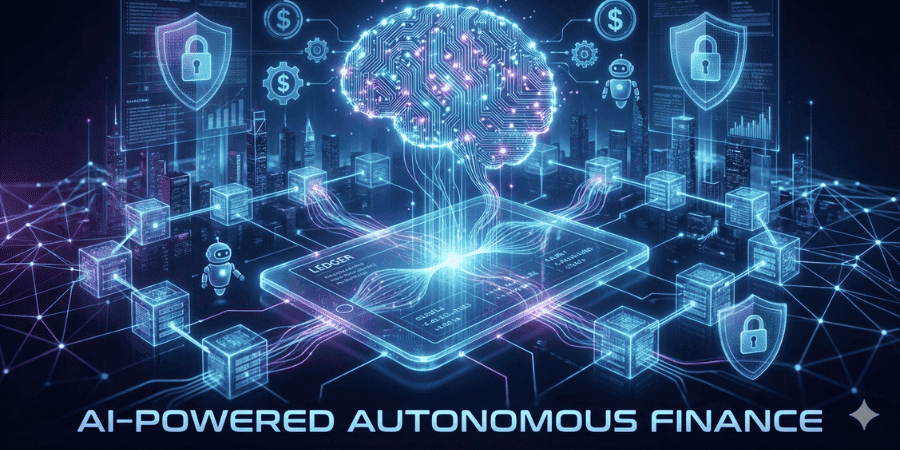

AI as the Intelligence Engine in the Modern Crypto Ecosystem
In today’s crypto space, I’ve seen how AI has evolved into the core decision-making layer behind many platforms. While public blockchains provide an accessible structure with transparent execution through a reliable data layer, it is AI agent models that convert raw market data into practical analytics. By studying on-chain activity, focusing on detecting patterns, and reducing false positives, these systems generate clear actionable findings that support smarter compliance, stronger monitoring, tighter security, and advanced fraud prevention.
In live environments, the advantage becomes visible through:
- 🔍 Smarter trading signals backed by deep scenario analysis
- 📊 Adaptive risk management that responds to every market regime
- ⚙️ Seamless integration with portfolio tooling and risk tooling
- 📈 Continuous learning from changing conditions
This practical evolution reflects the broader Convergence between artificial intelligence and Cryptocurrency, a powerful fusion reshaping the global financial landscape and driving real transformation while quietly revolutionizing money itself.
From Digital Transactions to Autonomous Financial Systems
What began as simple digital transactions is now developing into autonomous financial systems. Powered by AI-driven analytics, these systems can initiate transactions within strict pre-defined parameters and defined controls. They focus on detecting complex patterns, proactively flagging risks, and acting before funds move.
In my work with financial teams, the real balancing act always centers on:
- ⚖️ Balancing innovation with strong accountability
- 🏛️ Building structured governance frameworks
- 🔐 Ensuring auditable autonomy instead of unconstrained automation
This approach turns experimentation into responsible progress.
The Synergy Between AI and Blockchain Technologies
The true Synergy between blockchain technologies and AI creates a long-term foundation for continuous innovation. Blockchains provide a transparent, immutable execution layer built on trust, while AI interprets patterns, analyzes on-chain patterns, and automates decisions that strengthens security and reinforces compliance.
This relationship works because:
- 📂 Blockchain analytics creates a verifiable trail of transactions
- 🧾 Stronger auditability supports effective policy enforcement
- 🌍 The public blockchain ensures accessibility and transparency
- 🤖 AI enhances analytical capabilities for AI-driven finance
Together, they enable structured agentic payments and secure payment transactions under clearly defined parameters and operational controls.
Trading and Risk: Intelligent Modeling in Action
In trading operations, AI agent models process large volumes of market data using constant iteration, refined modeling, and deep integration within a managed portfolio. They identify hidden patterns, strengthen risk management, and quickly adapt to every changing market regime. The result is faster, smarter execution without emotional bias.
Security and Fraud Prevention: Real-Time Protection
Modern AI use cases are redefining Security and fraud prevention. Platforms like Chainalysis Hexagate deliver adaptive, real-time on-chain security against wallet compromise, phishing, governance exploits, and other malicious transactions. Powered by blockchain intelligence and advanced ML models, these systems maintain low false positive rates while triggering precise automated responses, including:
- 🛑 Simulated pre-signing checks
- 🚫 Transaction blocking
- ⏸️ Contract pauses
- 🌐 Multi-chain monitoring across L1s, L2s, exchanges, and protocols
This layered protection helps stop exploits before they spread.
Meanwhile, Chainalysis Alterya tackles scam threats and authorized push-payment fraud through advanced AI-powered risk scoring and cross-channel intelligence. It tracks scam-linked transfers across crypto platforms and traditional rails, identifying:
- 🕵️ Scam infrastructure
- 👥 Mule accounts
- 🧬 Synthetic accounts
Compliance and AML: Smarter Oversight at Scale
Strong Compliance and AML programs rely on Know Your Transaction and KYT frameworks to improve monitoring, enhance alert quality, and focus on material risks. This ensures teams are accelerating review of every high-risk activity without overwhelming operations.
With Chainalysis KYT, organizations analyze large volumes of blockchain data using advanced clustering heuristics, generating:
- 📢 Behavioral alerts
- 📡 Exposure alerts
Combined with sanctions compliance, sanctions screening, an integrated API, and on-chain oracle tools, firms can block sanctioned addresses, streamline compliance workflows, and maintain strong accuracy in decision-making.
Real-World Applications and the Rise of Agentic Payments
In cases involving Financial crime, merging AI decisioning with blockchain analytics improves investigations, enhances risk classification, and speeds up triage. With constant alerting, strong threat detection, and structured automated prevention, organizations move efficiently from detection to action, especially against authorized push-payment scams and mule networks through clear proactive controls.
The movement toward smart automation is transforming programmable money into intelligent payments and secure policy-constrained payments. Today’s AI agents assess diverse inputs and complex financial contexts, executing on-chain transactions within predefined limits via the secure execution layer, reinforcing true auditable autonomy.
We are also seeing strong mainstream adoption through initiatives such as:
- 🛡️ Visa Trusted Agent Protocol built on cryptographic standards to verify approved AI agents, helping merchants validate signed requests and filter out bots
- 💳 PayPal and OpenAI enabling instant checkout and agentic commerce inside ChatGPT using the Agent Checkout Protocol and ACP, supported by buyer protections and smooth payment orchestration
- 🌐 The Google AP2 standard supporting both fiat and crypto transactions, with participation from Mastercard
- ⚡ Coinbase introducing x402, reviving HTTP 402 Payment Required to enable seamless micropayments for machine-to-machine payments across web services, empowering fully autonomous agents
Beyond payments, DePIN and Decentralized Physical Infrastructure Networks use AI to allocate compute, optimize storage resources, enhance service quality, and improve value distribution, a topic often explored in the Chainalysis Public Key podcast.
Ethical Considerations and Governance Boundaries
As systems grow more intelligent, Data integrity and privacy in model training and inference become essential, particularly for high-stakes decisions. Addressing bias, ensuring fairness, and promoting financial inclusion directly impact compliance outcomes.
Responsible governance and accountability for agentic systems require:
- 💰 Defined spend limits and velocity limits
- 👤 Structured human-in-the-loop approvals
- 🔌 Emergency kill-switches
- 📑 Transparent audit trails
- 🔎 Detailed post-incident review linked to immutable records for verifiable oversight
The discussion around autonomy versus accountability reinforces the need for structured governance frameworks and clearly defined acceptable boundaries.
The Structure of the Future Financial System
The next era will be shaped by deeper Automation, richer real-time analytics, and streamlined agent-assisted operations. AI will remain the strategic decision layer, while blockchains ensure transparent execution across secure immutable rails that preserve trust.
As we move from human-directed digital transactions to fully AI-enabled agentic payments, maintaining transparency and auditability within evolving blockchain technology will demand close collaboration among financial institutions, technology innovators, and regulators.
With support from leaders like Chainalysis, the industry can prevent fraud, strengthen security, meet critical compliance obligations, and build truly intelligent systems, scalable efficient systems, and reliable trustworthy systems that responsibly power the age of autonomous finance.