Getting Started: The Real Choice Behind Every Application
In Pakistan, many People dream to work in a government office because it is seen as respectable and secure. But before applying, they must choose between a temporary job and a permanent one. This decision is not simple. Each type comes with its own good and bad sides, and the choice can shape your entire career journey.
Government departments regularly need to fill their staffing needs, and this is where institutions like the Punjab Public Service Commission and the Federal Public Service Commission step in. They hire qualified candidates for different posts. If you clearly understand the differences between both paths, you can align your decision with your long-term career goals instead of following what others are doing. I have personally seen many applicants rush into decisions without thinking about their future plans, and later they regret not analyzing their options properly.
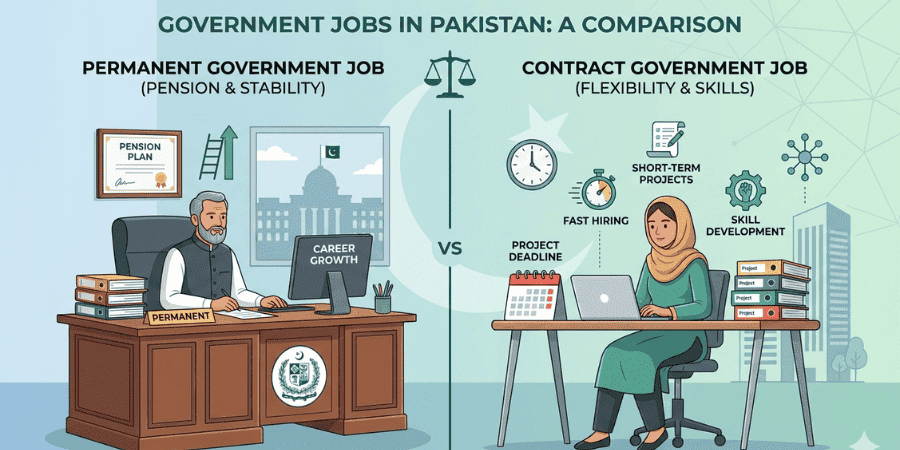
Understanding Permanent Government Jobs
When we talk about Permanent government jobs, we usually mean full-time roles that continue for a long time. These roles are considered safe and structured. Employees enjoy many facilities, including paid time off, pensions, health insurance, and raises that may come every year depending on policy.
One of the strongest advantages is the opportunity for promotion. In most cases, if you perform well and stay in your position, you can move upward over time. The pay structure is clear, and the job feels more stable compared to other sectors. Departments related to teaching, health care, and administration commonly offer such posts.
From my experience working with applicants preparing for exams, I’ve noticed that those aiming for permanent roles usually focus on long preparation because they know these jobs last a long time. They value Safety at work, future retirement plans, and structured growth. The system is often planned, and departments regularly promote deserving employees according to service rules.
However, the process can take More time. Recruitment cycles are slow, and many people compete to win limited vacancies. This makes the competition tough, and Candidates must prepare seriously before applying.
Exploring Contract-Based Government Jobs
A contract job is different in nature. It usually lasts for a certain amount of time, often between one and three years. These positions are also paid, but the benefits may not be equal to those offered to full-time permanent staff.
Departments may hire contract workers for technical work, specific projects, or to temporarily replace employees who are on sick leave or vacation. These roles are common when urgent tasks need completion and there is no room for a lengthy hiring cycle.
Although a contract role may not always feel stable like a permanent position, it provides useful experience. I have personally met individuals who started on a contract basis and later used that exposure to lead their way into better opportunities. In many cases, the Fast hiring process makes it a great way to enter the system quickly. You can pick up new skills, sometimes even set flexible hours, and build professional confidence.
Still, there can be a lot of uncertainty. The job may not feel fully safe, and long-term health or retirement benefits might not be included. That is why it is important to evaluate what you truly want and need before making a move.
Comparing Stability, Growth, and Flexibility
If we compare both options directly, the difference becomes clearer. Permanent roles offer structured growth, consistent pay, yearly increments, and formal advancement systems. They are better for those who want long-term security and predictable development.
Contract roles, on the other hand, provide flexibility and exposure. Because the selection system works on a Contract Basis, departments often follow a quicker hiring method. This can be helpful for individuals who want to gain experience quickly or test different departments before settling down.
Permanent employment focuses on long service, structured promotion, and policy-based increments. Contract employment focuses on short-term performance, specialized assignments, and skill-building. Both paths have good and challenging sides, and neither is automatically superior. It all depends on personal priorities and professional planning.
Financial Benefits and Long-Term Planning
Money is another major factor. Permanent employees often receive steady pensions, medical coverage, and official allowances. Their salary structure, including raises given every year, supports long-term financial stability. This makes planning for family, savings, and retirement easier.
In contrast, contract employees receive a fixed package that may not include the same level of benefits. While the initial offer may look attractive and the role may seem fantastic, the absence of long-term perks can affect overall financial growth. Therefore, always check how much the position pays, what it offers, and how long it will last before making a decision.
Career Strategy Before You Apply
Before you apply, carefully read the official ad. Many applicants ignore details and later realize they misunderstood the terms. The advertisement clearly mentions whether the post is permanent or contract, the salary it pays, the benefits it offers, and the duration it will last.
If your main goal is strong job security, structured advancement, and a clearly defined career ladder in government service, then a permanent post may be the best fit. But if you are aiming to gather experience, build confidence, and explore opportunities, then contract roles can be a smart starting point.
Understanding these differences helps you choose wisely and plan a successful future. Many People I have guided over the years realized that the right decision was not about following trends but about aligning opportunities with their own long-term ambitions. When your choice matches your career vision, you feel more focused and motivated at work.